Money & What It Buys
FTU Currency
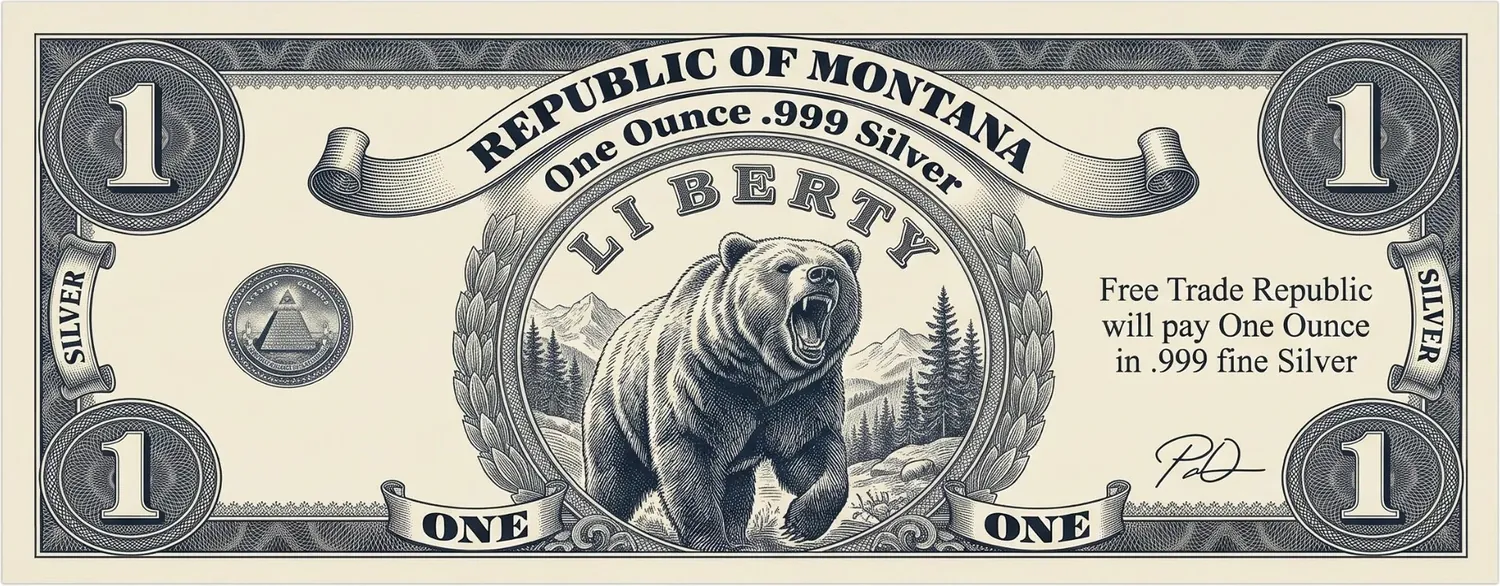
The Free Trade Union is Montana's money power, and its currency runs in two tiers: silver ounce notes — the money itself — and Pounds, the paper change beneath them. If you know Bisons and stamps, you already know the shape of it: the Pounds stand to the ounces exactly as stamps stand to the Bison — the small, everyday fraction of a weightier standard. What makes Union money different is what stands behind it: metal. Every tier of it is a claim on weighed metal, and the Union has kept that promise since a scrap yard in 2044.
Founded on a kept promise
The Union began with one man's word. In 2044, on the ruins of a copper scrap yard, Earl Hymn Taughton started issuing promise-to-pay notes — and the notes worked, because he kept the promise. That is still the doctrine under every Union bill: money is backed by precious metal, and a note is only ever a claim check on the real thing. The silver notes are certificates for .999 fine silver; the Pounds are copper paper, redeemable in copper on demand at the Bank of the Free Trade Union. A currency you can weigh is a currency you can trust — that is the whole of the Union's monetary theology, and generations of Montana trade have not proved it wrong.
The silver ounce notes
The top tier is the silver ounce note: a certificate for weighed silver, issued in the name of the Republic of Montana in four denominations — 1, 5, 10, and 20 ounces of .999 fine silver. Each face carries a Montana emblem under the Liberty arch, and each back carries the country the silver comes from:
| Denomination | Front | Back |
|---|---|---|
| 1 ounce | The grizzly | The bison herd |
| 5 ounces | Liberty | The mountain lake |
| 10 ounces | The bighorn ram | The train |
| 20 ounces | The elk | The fly-fishing river |
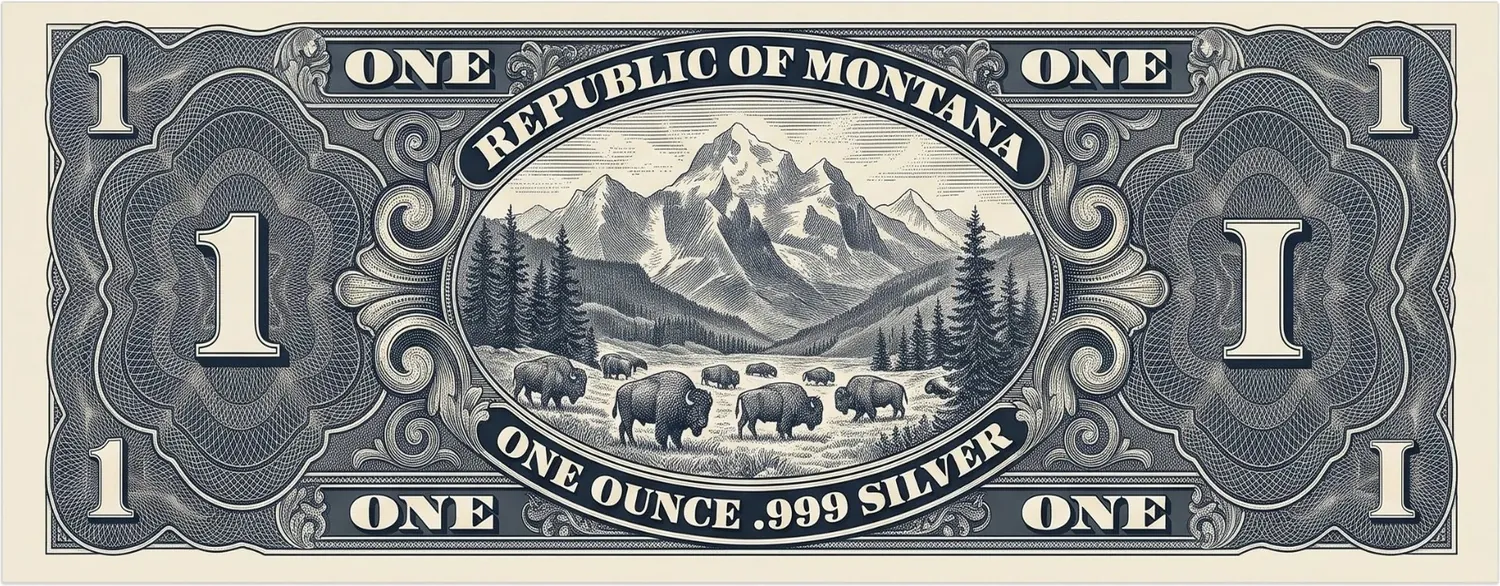
One ounce. Front: the grizzly. Back: the bison herd.
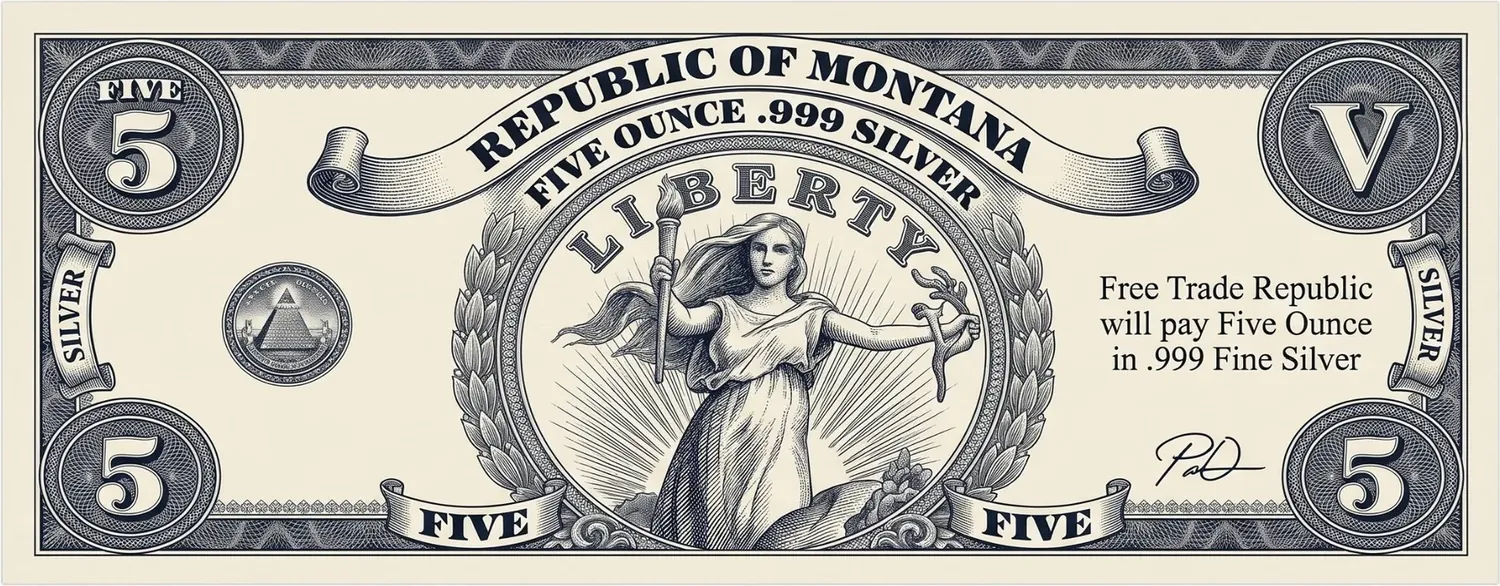
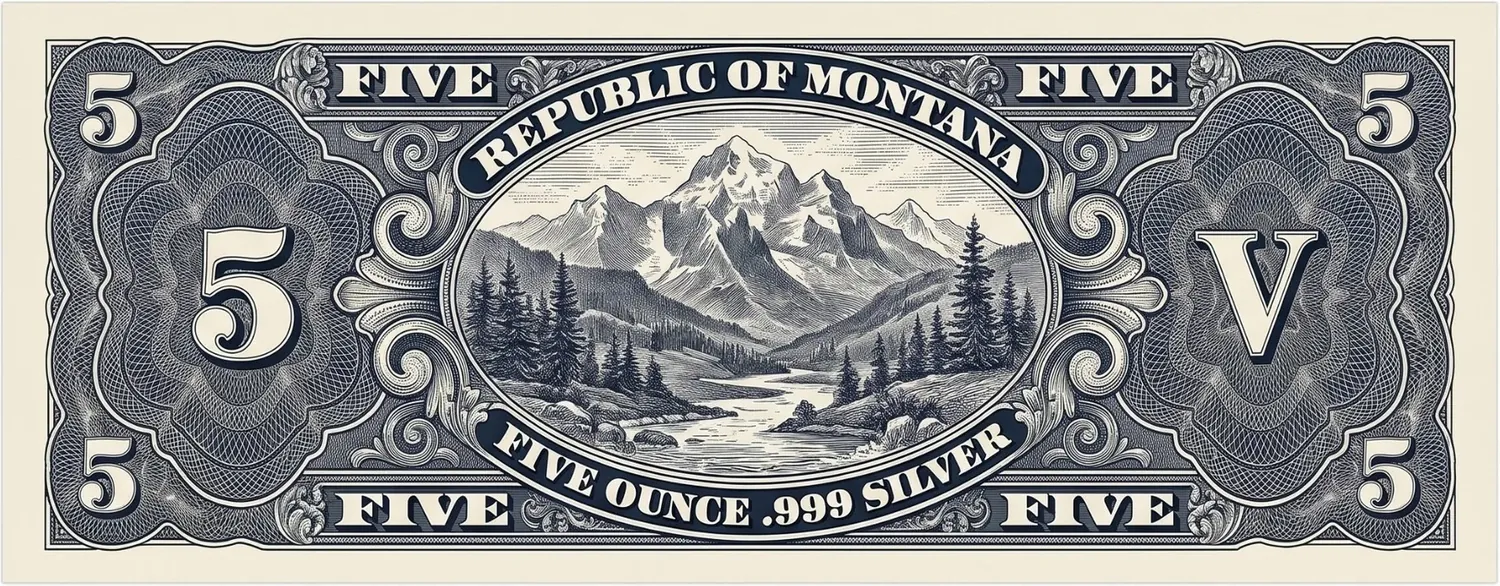
Five ounces. Front: Liberty. Back: the mountain lake.
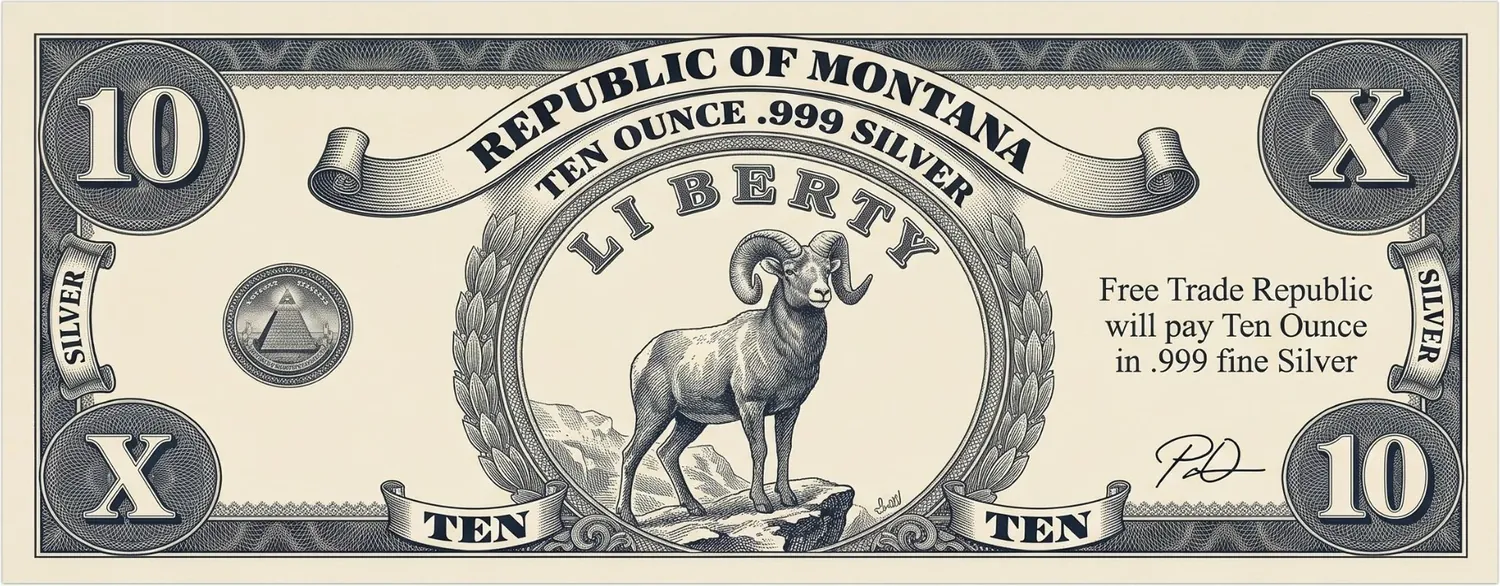
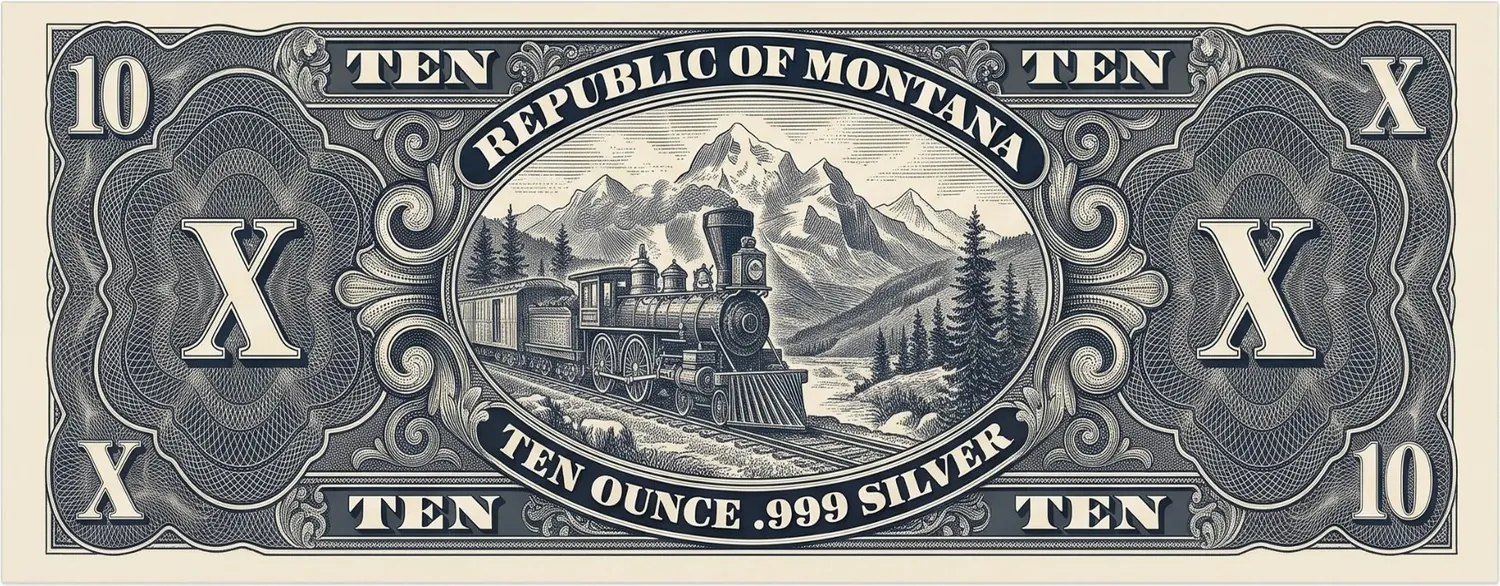
Ten ounces. Front: the bighorn ram. Back: the train.
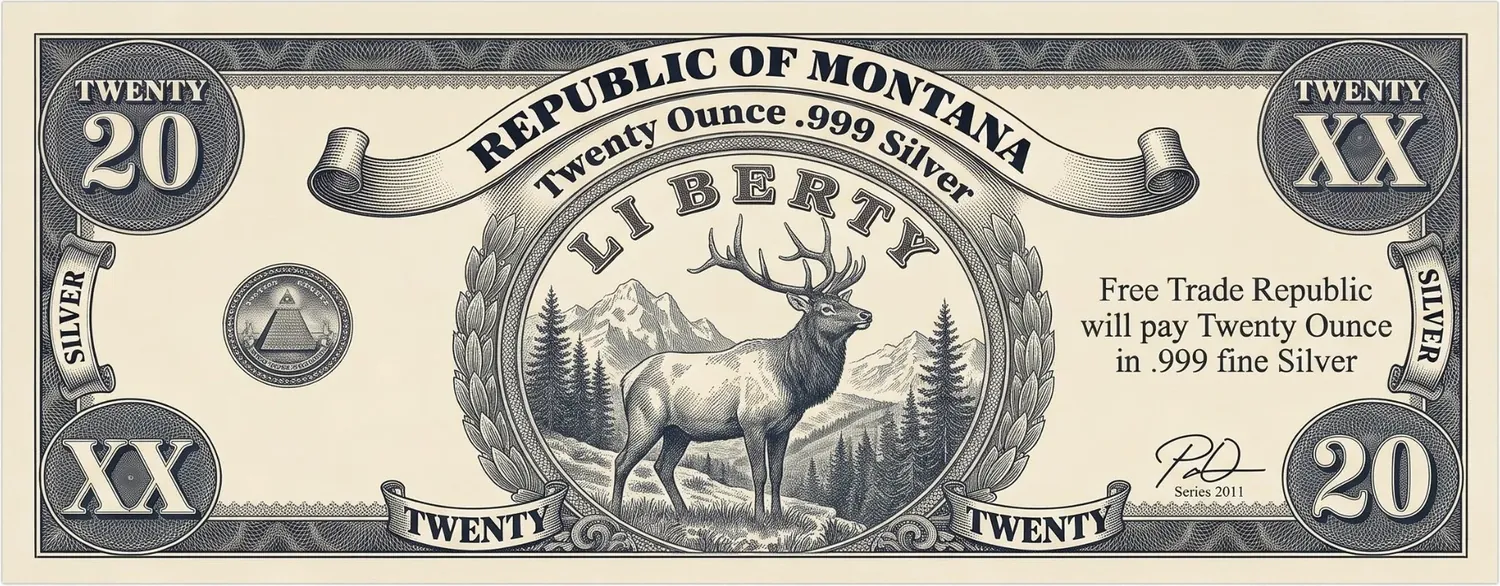
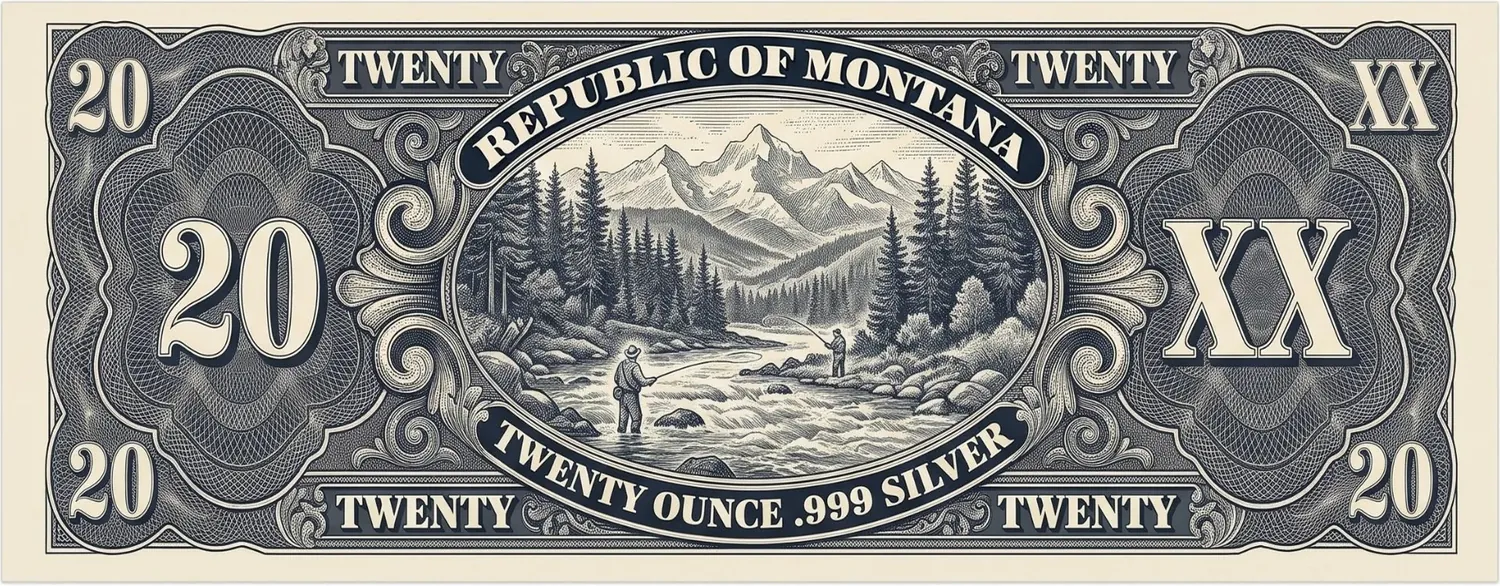
Twenty ounces. Front: the elk. Back: the fly-fishing river.
The seal, in color
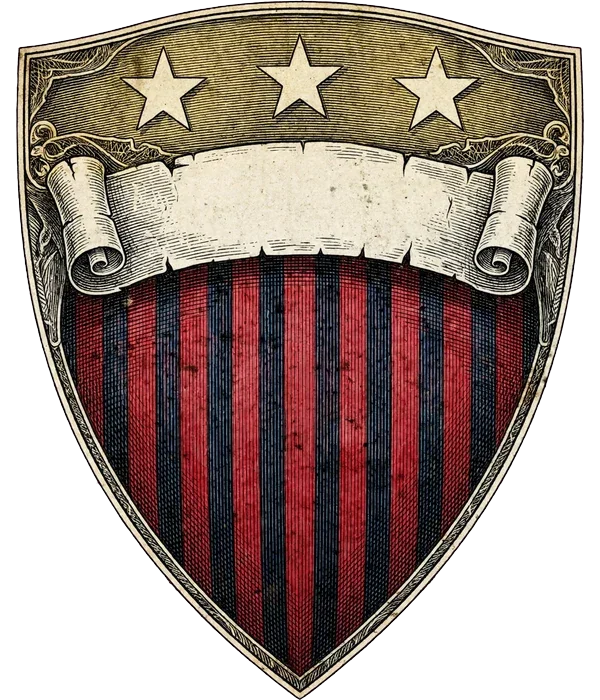
Printed money carries a printed seal — a grey engraving. A genuine FTU silver note carries more: the Union shield is overlaid in full color at the printed seal's seat on the front — gold chief, three cream stars, white scroll, and red-and-blue stripes tapering to the point. It is the one splash of color the Union allows its money, and it is deliberate: the color seal is the mark of the genuine article, laid over the engraving exactly where a cashier's eye goes first. Pounds carry their shield printed in their own design instead — and a stamp, which is its own story, told below.
Pounds: the change
Under the ounces rides the Pound — the £1, £5, and £10 notes of the Bank of the Free Trade Union, the Union's copper paper and Montana's everyday small money. Pounds are what Union troopers carry in their pockets and drop with their kit; they are what tolls, meals, and market stalls actually change hands in. A Pound's promise is printed on its face — one Pound in .95 copper, on deposit, redeemable on demand — and the redemption behind that promise is very real, as the Union's own page tells, Great Redemption and all.
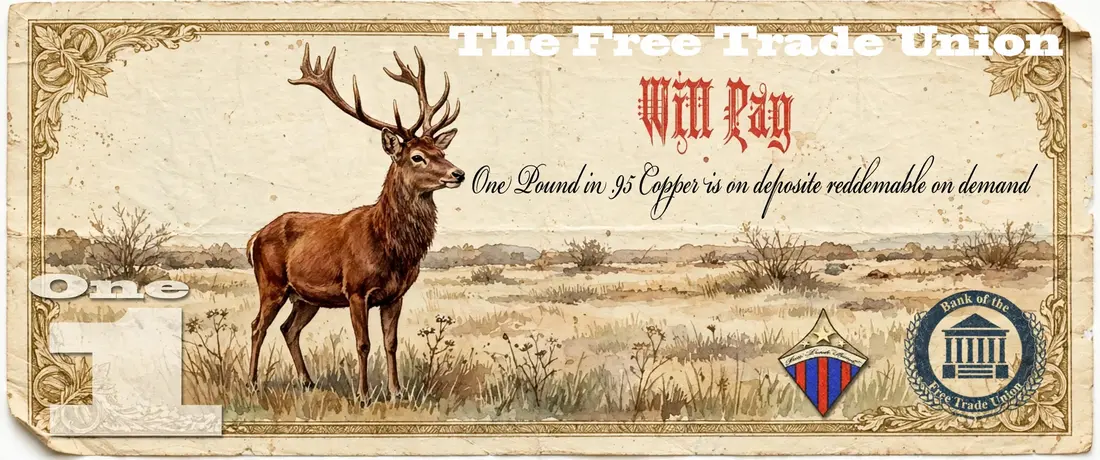
One Pound. A stag on the open prairie, the printed shield, and the promise on its face.
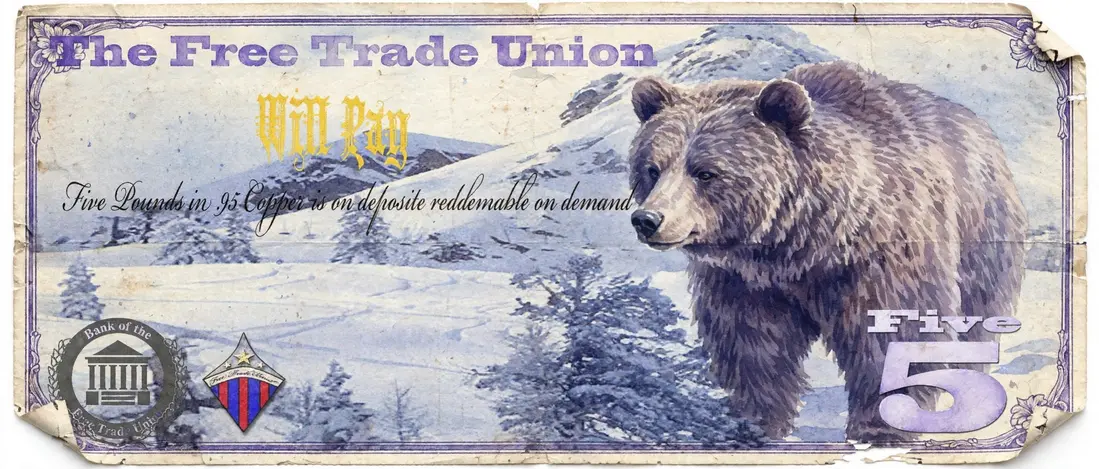
Five Pounds. A grizzly in the snow country, in the note's violet register.
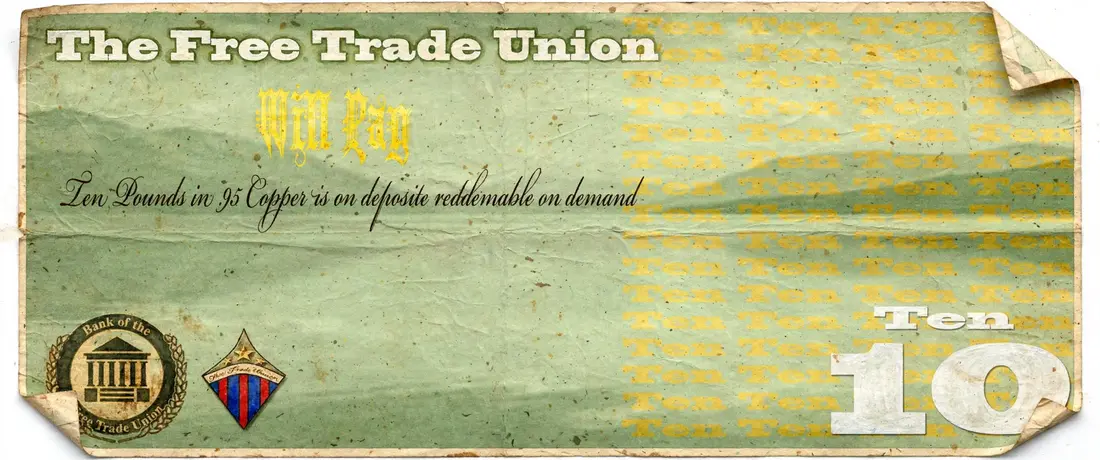
Ten Pounds. The green ten, its denomination repeated across the field — and even the cleanest printing of it has lived a life.
A Pound carries no banknote serial. Instead, each one is stamped: FREE TRADE UNION over its own number — № 004821 and counting — struck in ink at the upper-left of the front, the classic serial seat. The stamp is the serial, and the number is the note's name.
Every note is one note
No two Union bills are alike, because every physical note is an instance with its own identity. Silver notes carry a true banknote serial: a series mark, eight digits, and a block letter — 2044 · 00482117 · B. The series marks are Union years, counted from the founding in 2044, and the serials print in the seal's own blue ink, stamped at the two classic seats on the front. Bison Bucks ride the same engine on their own older plates (series 1923 and 1924). And in the wasteland's strangest small honesty, a note's number is struck fresh each time it is shown — the wallet's own card says it plainly: the bills are numbered and seal-stamped when you inspect them, a fresh number every showing. What persists is the note itself: its denomination, its grade, and its history of wear.
Twelve grades of wear
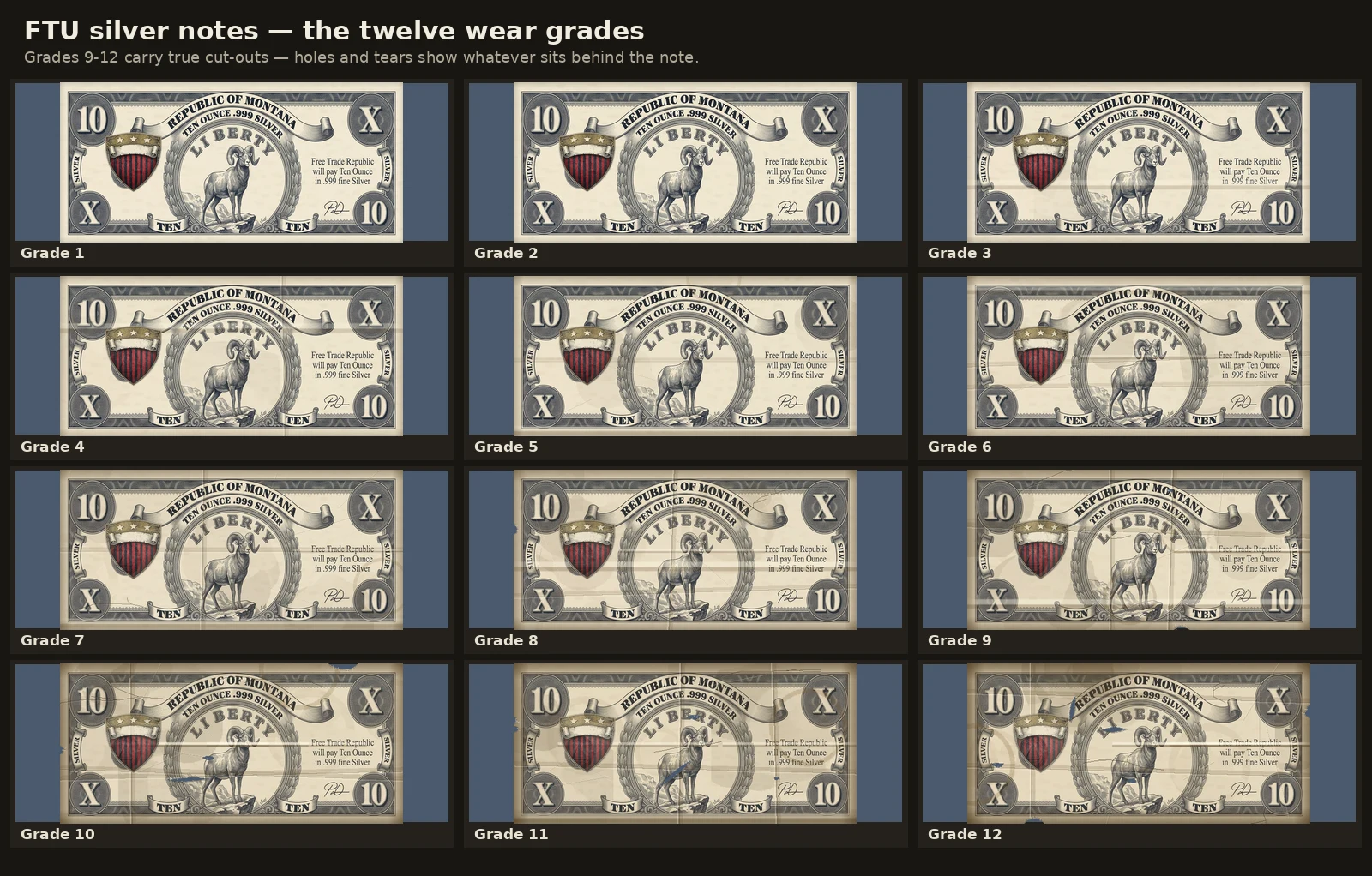
Paper lives hard in the Long Dusk, and Union money is graded the way old-world collectors graded theirs — in twelve circulation grades: Uncirculated · About Uncirculated · Extremely Fine · Very Fine · Fine · Very Good · Good · Fair · Poor · Ragged · Torn & Taped · Beaten Relic. A note's grade drives everything the road has done to it — faded ink, grime, fold creases, stains, taped splits, missing corners. Bison Bucks take the same engine deeper, stacking seeded damage — burns, water stains, pencil scribbles, desk stamps — until no two Bucks in a wallet match. None of it is simulated frame by frame: each note's face is drawn once — art, wear, serial, and seal together — and kept, the way a real bill keeps its face.
The wallet: Paper Notes
The bills you actually hold live in your wallet's “Paper Notes — the actual bills” card — the real paper, not just a balance. Tap any note and it opens in the flip viewer: front, then back, under a header reading denomination · grade · serial. Spendable balances stay ledger numbers; the notes are the paper layer over them — minted when paper changes hands (loot, rewards, exchange desks, the casino floor) and burned when you exchange back. By Union law the two tiers are never merged into one number: ounces are ounces and pounds are pounds, counted separately wherever FTU money is held.
Exchange: the Weighing House
Union money meets the wider wasteland at the Weighing House desks — New Great Falls, Last Chance Gulch, Rimrock, and Red Lodge — where the standing law is simple enough to carve over the door: 1.5 Pounds = 1 Bison, with the house taking its cut of 1.8%, rounded up. Beyond the desks, the tiers mostly stay in their lanes: Bisons remain the general standard every settlement honors, stamps make Bison change, Pounds make ounce change — and the Union's silver sits at the top of the pile, heavy, honest, and exactly as much money as it weighs.
See also
Currency & Items — the whole economy in one place · Bisons — the wasteland standard · The Free Trade Union — the issuer · Items — what the money buys.
Last updated: 2026-11-21.