About the Game
The Story Behind RadTana
RadTana is a free post-apocalyptic RPG set in Montana, playable right in your browser. It is also something rarer than a game: it is one developer's twenty-year-old ambition, finally big enough to build. This is where it came from.
A long road from TAL-SOFT
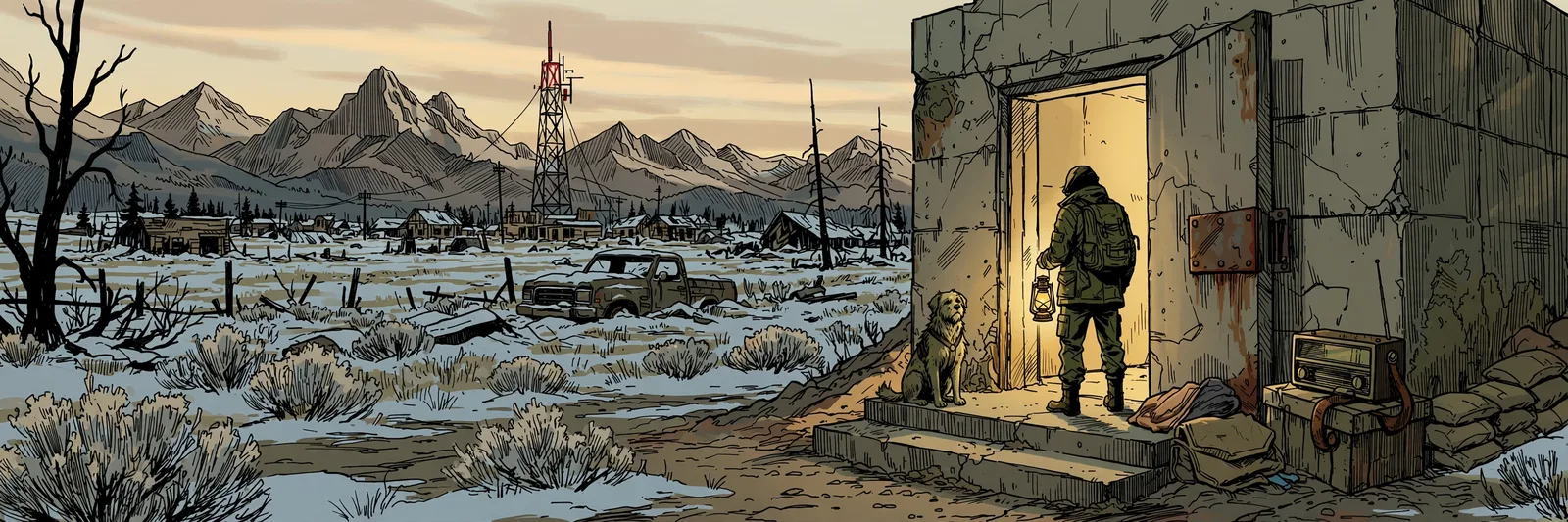
TAL Softworks — TAL-SOFT, in the early days — shipped its first software in 2005. Taylor Lasch was a teenager then, writing and selling real programs years before "indie game dev" was a career anyone could point at. The tools changed. The stubbornness didn't.
RadTana is the project that was always waiting at the end of that road: a full post-apocalyptic role-playing game — settlements, factions, an economy, a radio station that never quite goes off the air — built by a solo developer in Phoenix, Arizona. For most of those twenty years, a game this size was simply more than one person could hold. Then the workbench changed.
Why Montana
Most wastelands are invented. Ours is mapped. RadTana's Montana follows the real land — the real rivers, the plains running up against the Rocky Mountain Front, real towns wearing a hundred years of weather. Great Falls becomes New Great Falls. The Missouri still cuts its course. When you cross the wasteland, you are crossing a place that exists, drawn the way it actually lies.
That choice does half the worldbuilding before we write a word. A settlement out here isn't a set dressing — it's what people built from what the land and the ruins handed them, in a place with its own weather, its own distances, and its own reasons. Big Sky Country was always going to be the setting. It just had to wait for the game to catch up.
Death leaves a paper trail
Every run in RadTana begins with one bad day: the Loser Lottery, the civic draft that exiles the unlucky beyond the shelter walls. From there it's scavenging, karma, factions, and weather that can blind you mid-journey — and permadeath. When your survivor dies, they die.
But they don't vanish. The game paints every death — every boss kill, every once-ever meeting — into a collectible card and frames it in your Hall. Your worst run becomes a keepsake. Your best one becomes a trophy. That's the mechanic players tell their friends about, and it's the heart of the game: in RadTana, the story of how you died is a thing you get to keep.
[TAYLOR QUOTE — PENDING]
— Taylor Lasch, developer
One developer, one AI twin, no secrets
We don't hide how this game is made. RadTana is built by Taylor Lasch with his AI twin — an AI collaborator that shares the workbench: writing code, drafting art, keeping the books of a world too big for one memory. AI assistance is what makes a vision this size possible for a studio of one.
It is assistance, not authorship. A human being directs this project, makes the calls, and answers for the quality — every system, every line of the story, every fix that ships or gets sent back. When something in the game is wrong, there's a name on it, and it's his. We think that transparency is worth more than pretending a team of fifty did this.
Free means free
RadTana is free to play — forever, no catch. No advertisements. No loot boxes. No pay-to-win shop waiting at the end of the tutorial. Keeping it free is not a promotion; it's the whole point.
The project is supported the old way: players who think it earned a coffee can tip through the jar on the homepage, and the merch store helps keep the lights on. A tip is never required to play, and nothing in the wasteland is locked behind one.
Where it goes from here
RadTana is a living public beta. New systems, events, and cards land in waves, and the workshop writes it all down — the dev blog carries the Beta Notes and diaries as the work lands, and the wiki documents every faction, class, and corner of the world. The wasteland keeps growing, and your saves ride along.
The door is open. It has been open since 2005 — it just took this long to build the Montana on the other side of it.